
Three Countries, Three Approaches to Art Education for children and youth — and What I Took from Each
Your child comes home from an art class happy—but without having learned an obvious new skill. Is that a failure or a success?
Many parents see art as pleasant but optional. I understand why—and I disagree.
I have taught art in three countries, and each one gave me a different answer to that question. Here is what I observed from the inside.
Ukraine: A Foundation You Appreciate Later

The Ukrainian system gave me structure and time.
At art school, we studied three times a week for three hours at a time. We worked on still-life compositions, drawing, painting, and design. And that was only the beginning.
In college and at the academy, those hours multiplied into years of daily practice, larger-scale projects, and greater expectations. That was where real learning happened—not simply because we spent more time studying, but because the work reached an entirely different level.
However, there is something interesting that I have thought about for a long time. Much of my knowledge became meaningful only later, when I was already in college and understood why it mattered.
When I was younger, I listened to my teachers, but I did not fully absorb everything they taught me. It was not because I was not paying attention. A child’s brain is simply not always ready to connect all those concepts.
Art school accomplished something else that was equally important: it kept my interest alive. Those early years of practice settled deep within me and rose to the surface when I was ready to use them.
But one thing was missing: breadth.
We explored one direction deeply and remained within it. The vast world of art—with all its forms, media, and possibilities—remained largely unexplored.
Depth without breadth is powerful, but it is incomplete.
China: Technical Strength Without a Strong Foundation

At Chinese universities, I was amazed by the students’ concentration. They sat down and began working immediately, without unnecessary movement or distraction.
Their drawings were detailed, high-contrast, and immediately eye-catching.
However, structure—the foundation and skeleton of the drawing—was often missing. The surface might have been beautiful, but the form underneath was distorted.
Even someone without art training can often sense this. Something feels wrong, even when they cannot explain exactly what it is.
I taught the students to observe their subjects from every angle and to understand the complete form. They were not used to working that way, but they tried. Gradually, their drawings changed, along with their understanding of the artistic process.
However, when I asked them to invent something of their own, they froze. They had been taught to reproduce rather than imagine.
What struck me most was the gap in their creative education.
As young children, they had freedom, materials, and opportunities to be creative. Then formal schooling took over, art was pushed aside, and that creative muscle stopped being exercised.
By the time they reached university, their ability to imagine freely was still there somewhere, but it had been buried beneath years of other priorities.
That gap is difficult to close.
Canada: Permission to Think Differently
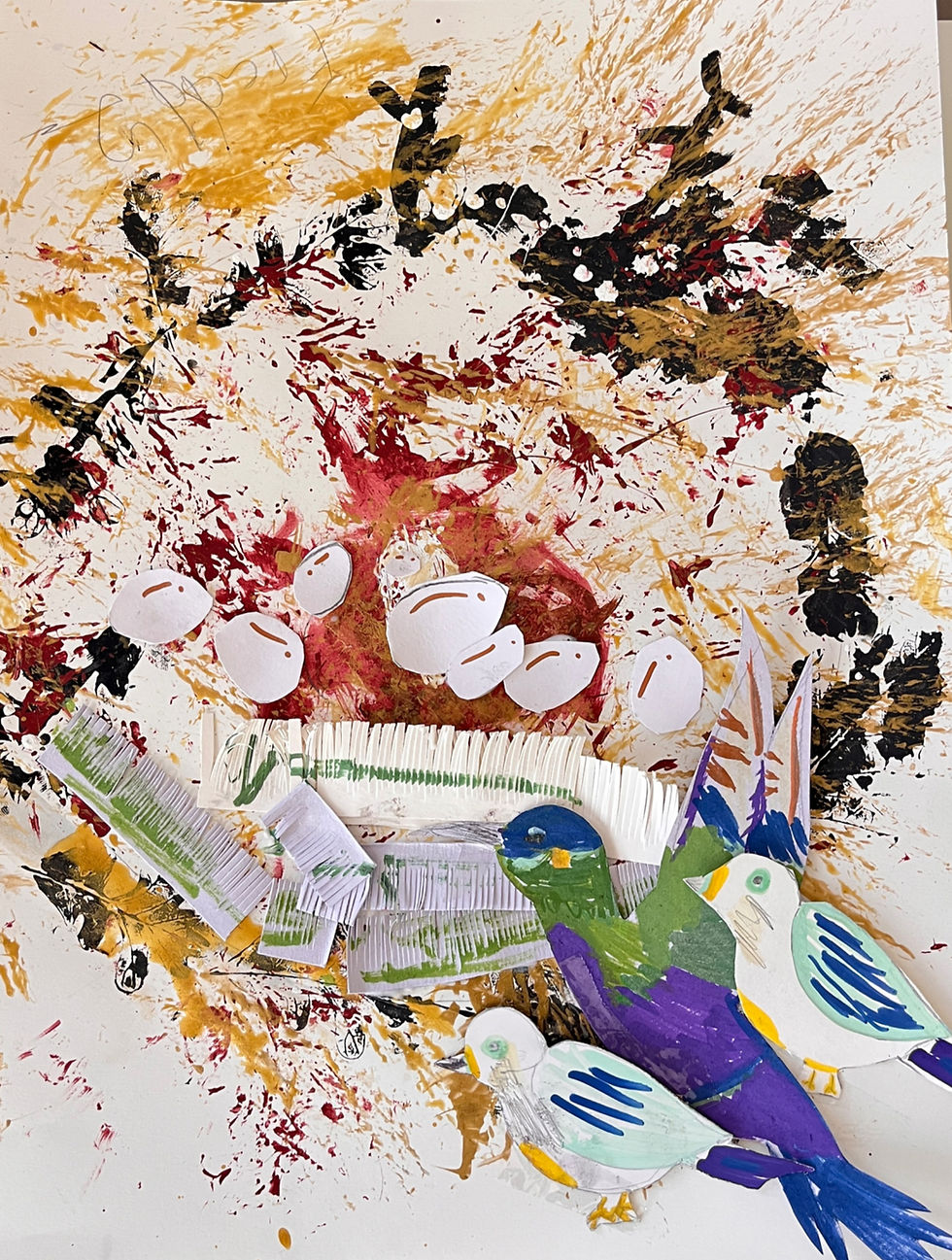
In Canada, the approach is different.
Children are not placed under the same level of pressure. There is room for experimentation, exploration, and freedom. Most importantly, children are given permission to think in their own way.
From an early age, they receive the message that their ideas have value and that their perspectives matter.
When children are placed within rigid boundaries too early, one question can begin circling constantly in their minds:"What is the right way to do this?"
That question can block everything else. When children are given freedom first, they can grow into people who are not afraid to propose something new.
The one concern I continue to think about is time. One hour of art per week is an introduction, not an immersion. However, that does not mean it has no value.
Not every child will become an artist—and that is perfectly fine. What matters is that a spark of creativity remains with them throughout their lives.
Interest is the first seed from which everything else can grow. And when the boundaries of self-expression expand beyond limitations, young minds flourish exactly where they are meant to be.


Comments